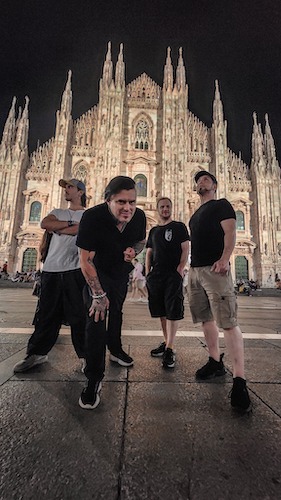
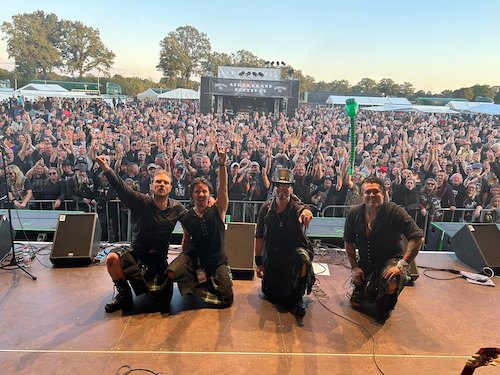
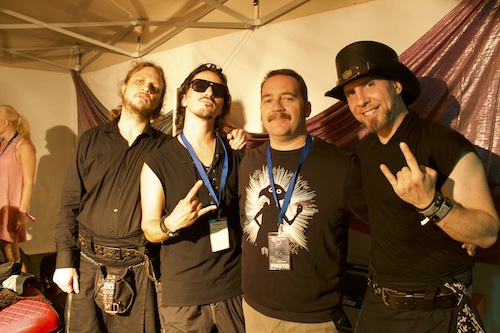
Due concerti in due giorni in quel di Montelago Celtic Festival, e i Triddana conquistano il cuore del pubblico accorso all’evento marchigiano più atteso dell’anno. Persone che ballano, urlano, saltano, sudano e applaudono la band argentina che porta sul palco un grande mix di heavy metal e cornamuse. Dopo anni di email ho finalmente modo di incontrarli di persona e poterci parlare; quella che segue è la chiacchierata fatta prima del secondo concerto con Pablo Allen, cornamusa e whistle della band, toccando argomenti come l’ultimo album, i grandi festival e perché un ragazzo prende in mano una cornamusa invece di una bella chitarra elettrica. (NB- da quando è stata fatta l’intervista, alcune cose in casa Triddana sono cambiate: per le news seguite la pagina Facebook di Mister Folk).
– SCROLL DOWN FOR ENGLISH VERSION! –
UN GRANDE RINGRAZIAMENTO A MARZIA VETTORATO PER LA TRADUZIONE DELL’INTERVISTA
Questa è la vostra seconda volta in Italia, giusto?
No, è la quarta!
Dove avete suonato precedentemente?
La nostra prima volta in Italia è stata nel 2023: abbiamo suonato al Triskell Celtic Festival di Trieste, e ci siamo esibiti anche al Bundan Festival di Stellata di Bundeno; l’anno scorso, nel 2024, eravamo al Druidia Celtic Festival di Cesenatico. Tutto ciò, alla fine, ci ha portati qui, al Montelago Celtic Festival.
Vi siete esibiti ieri. Cosa pensate dello show e del festival?
Siamo abbastanza scioccati! Siamo semplicemente sbalorditi dalle dimensioni di questo luogo che ospita il più grande festival celtico in Italia, dal palco enorme… vederlo nelle foto è un conto, ma essere qui è tutta un’altra cosa, un’altra esperienza. Gli italiani sono sempre molto amichevoli, la loro accoglienza è ottima e ci sentiamo sempre ben accetti; tutto è sempre organizzato in maniera fluida. Gli italiani hanno la fama di essere disorganizzati e caotici, ma perlomeno nei festival (e per cose di questo genere), tutto ciò non si vede. Conosco l’Italia piuttosto bene, e ritengo che gli italiani meritino maggiore stima, perché lavorano benissimo e sono molto organizzati, assolutamente.
Lo show di ieri è stato piuttosto breve! Oggi suonerete più a lungo, credo.
Eh sì! Ci sono state alcune modifiche nelle programmazioni, non solo in quella dei Triddana. Gli organizzatori avevano bisogno di fare alcuni aggiustamenti, affinché tutto filasse liscio. Ieri abbiamo suonato una setlist di 60 minuti, il che è comunque ottimo, dato che a conti fatti, un’ora è un buon range. Oggi potremmo suonare un po’ di più o un po’ di meno rispetto a ieri, ci faranno sapere. Tutti qui stanno facendo del loro meglio, e ci hanno spiegato che lo show potrebbe essere più lungo o più breve, dipende da come ci troveremo al momento. Conoscevamo già il pubblico italiano, quanto sia matto e quanto ami fare festa (e godersi lo show saltando e cantando), quindi sapevamo cosa aspettarci, eravamo pronti. Riguardo ieri, faceva un caldo incredibile, ma abbiamo resistito e siamo andati avanti, così come il pubblico.
La vostra band ha una bella storia e diversi album alle spalle, ma non siete un “grande nome”, perlomeno qui in Europa. Venite dall’Argentina, e non è semplice suonare qui. Quanto è importante esibirsi in un grande festival, davanti a una grande folla, e non in un piccolo club?
Naturalmente è molto importante; è ciò a cui abbiamo sempre aspirato, andare ai festival e in nuovi posti, in modo tale che la gente possa conoscerci. Non sono tempi facili per le band, perché sai… molti gruppi come il nostro procedono in maniera indipendente, e uno dei modi migliori per farsi conoscere è esibirsi in festival come questo; devo però dire che tutti i festival sono importanti. Naturalmente, ci sono Montelago, Wacken, Summer Breeze… ci sono tanti eventi in Europa, e c’è molta attività; ovunque andiamo, troviamo nuove persone e conquistiamo nuovi fan. Ci esibiamo sempre in molti festival durante l’estate, quest’anno abbiamo 15 live (nelle annate migliori ne abbiamo 15, 18 o 20) e stiamo raggiungendo il traguardo di 100 concerti nel continente. Per esperienza, posso dire che è sempre importante avere molti concerti e suonare ovunque, non solo negli eventi più grandi.
Parliamo dell’album Breaking From The Fold: conosco i vostri album e posso dire che questo è una pietra miliare, è vicino alla perfezione. A partire dal primo album, avete mostrato di avere un “Triddana sound”, ma ogni lavoro ha qualcosa di leggermente differente, e quest’ultimo è un “classico”. Guardando al passato, pensavate di arrivare a questo punto?
Ti ringrazio! Beh, questo era il nostro obiettivo, quindi potevamo immaginarlo: era ciò a cui aspiravamo, diventare noti non solo in Argentina ma anche in altri paesi, soprattutto in Europa, perché in generale è l’epicentro del metal. Naturalmente, non potevamo immaginare del tutto quale piega avrebbero preso le cose, perché abbiamo attraversato un sentiero a “zig zag”, ma in effetti sì, è ciò che volevamo e che sognavamo. Solo, non sapevamo come ci saremmo arrivati, ma andando avanti abbiamo trovato il modo: partecipando a Montelago, facendo tour estivi ogni anno, suonando in moltissimi festival… però sì, inizialmente non sapevamo con esattezza come sarebbe andata.
Avete il vostro sound peculiare, dal primo all’ultimo album: lo cercate intenzionalmente, oppure è qualcosa che vi viene naturale?
Beh, la mente creativa per la musica è JJ (Juan José Fornés, ndMF), il nostro cantante e chitarrista, e anche il nostro compositore principale; ha sempre una visione chiara di ciò che vuole, ha molte ottime idee e sa come svilupparle. Tra un album e l’altro, facciamo in modo di combinare ciò che risulta familiare con qualcosa di nuovo, così il pubblico è in parte “rassicurato” e in parte sorpreso. C’è un po’ tutto di ciò di cui ha bisogno, in un certo senso; la nostra musica deve funzionare sia per i vecchi fans, sia per i nuovi.
Avete un ospite in questo album: Ralf Scheepers, un grande screamer. Perché avete scelto lui?
Beh, è una storia personale. In primo luogo, è una leggenda, lo ammiriamo da anni e durante il nostro primo tour lo abbiamo incontrato di persona: una dei nostri amici tedeschi ci ha accolti nel 2016, conosceva Ralf ed erano in contatto. Ha detto a Ralf: “C’è questa band, i Triddana, sono tutti tuoi grandi fan… magari potreste incontrarvi…”. In realtà, ha organizzato una lezione di canto: JJ è un grande cantante, ma d’altra parte… si sa, c’è sempre da imparare, specialmente dai grandi dell’heavy metal. Quindi, JJ ha incontrato Ralf di persona, gli ha mostrato la nostra musica e il nostro lavoro, hanno parlato di tecnica… ed è stato lì che ci ha conosciuti, e gli siamo piaciuti. Alcuni anni dopo, mentre stavamo lavorando a questo album… avevamo già composto Wasted Paradise, e abbiamo pensato: “Wow, questo brano funzionerebbe benissimo con un ospite come Ralf!” Quindi lo abbiamo contattato, ha detto “Sì, facciamolo!”, e… lui è fantastico, gli abbiamo inviato la traccia, lui ha registrato le sue parti e… non potevamo crederci, eravamo impressionati quando abbiamo ascoltato ciò che aveva fatto. Questa è la storia, dal primo incontro alla collaborazione futura.
Il brano è davvero bello. A volte leggo che voi suonate “heavy metal con cornamuse” e cose del genere. Ci sono due canzoni popolari irlandesi, Julia Delaney e The Gravel Walks, che avete reso “metal”: come avete iniziato a suonarle? Avete pensato “Wow, mi piace questa canzone, ma vorrei aggiungerci un po’ di chitarre”?
In realtà stavamo cercando qualcosa di “folk” per l’album, e abbiamo pensato di trasformare un brano tradizionale in versione heavy metal: questo è stato il punto di partenza. In realtà, avevamo già fatto qualcosina del genere: in Breaking From The Fold abbiamo cornamuse ecc., nel nostro secondo album c’è Galloping Shadows… in un certo senso, ci siamo istruiti, e per quest’album cercavamo qualcosa di davvero tradizionale. Non abbiamo avuto nessuna di queste due canzoni prima perché erano su un album dei The Bothy Band, un gruppo folk irlandese, ma poi abbiamo iniziato a provare degli arrangiamenti in chiave metal. La musica folk irlandese e la musica folk scozzese hanno qualcosa in comune: all’inizio del brano c’è una piccola melodia suonata da un singolo strumento, poi attaccano gli altri strumenti, finché non suona tutto il gruppo. Questo è ciò che abbiamo tentato di fare, e abbiamo creato un tipico arrangiamento celtic folk: iniziamo col flauto, poi entrano il tin whistle, il basso, la batteria… finché tutto esplode nel metal.
Penso che abbiate nuovi brani per il prossimo album. Puoi dirmi qualcosa a riguardo?
C’è della nuova musica in cantiere: non abbiamo un programma e per il momento non c’è una data di pubblicazione, ma sì, abbiamo qualche idea. Stiamo lavorando su alcune cose, ma non c’è molto da dire. È un segreto! (ride)
Sì, lo so, ma ogni volta che tento di fare questa domanda, ottengo sempre la stessa risposta (ridiamo). Ok, parliamo della Scozia: in che misura le sue tradizioni hanno “influenzato” la cultura argentina, e la vita di tutti i giorni?
Non se ne sa molto, ma l’Argentina è un paese che ha accolto numerose migrazioni, in dall’Europa, in particolare dalla Scozia, dall’Irlanda e anche dal Galles; per esempio, ci sono colonie gallesi in Patagonia e molti immigrati irlandesi e scozzesi in diverse zone di Buenos Aires e altre province. Non ne conosco molti, ma sono molto testardi quando si tratta di difendere la loro cultura; il primo gruppo di cornamusisti è stato fondato all’interno della St. Andrew’s Society sul Rio della Plata, circa 70 anni fa. Quindi, ci sono gruppi di cornamuse a Buenos Aires e in altre zone dell’Argentina, e sono cresciuti nel corso degli anni: ora ce ne sono almeno quattro o cinque. Non si tratta di una comunità molto grande, ma è molto resiliente. E dal momento che la musica celtica piace un po’ a tutti (e non solo a tre o quattro persone) questo permette di andare avanti. C’è la musica, c’è una scena, ci sono le band, ed è questo è un po’ il modo in cui ho iniziato a suonare.
Di solito, ogni ragazzo sogna di essere su un palco con una chitarra, come Jimi Hendrix, Ritchie Blackmore o Jimmy Page: perché hai scelto di suonare flauti e cornamusa? Chi ti ha ispirato di più? Cosa ti ha spinto a prendere in mano un flauto anziché una chitarra?
Beh, è una questione divertente! Ho iniziato a imparare a suonare la cornamusa e la chitarra allo stesso tempo, quando avevo 16 anni. Gli Iron Maiden sono stati la prima band di cui sono diventato fan, e sono stati ciò che mi ha fatto interessare alla musica, più in generale; mio padre suonava la cornamusa, e in qualche modo ero vicino a quella comunità. E così, ho iniziato a studiare entrambi. Poi, ho semplicemente mollato la chitarra e ho proseguito con la cornamusa, e alla fine con il flauto: suonavo con un gruppo folk, e mi è stato detto “Oh, è così che muovi le dita sulla cornamusa, allora dovresti essere in grado di suonare anche il tin whistle!” Ho risposto “Ok, perché no?”, e ho iniziato a imparare a suonarlo per conto mio, prendendo qualche lezione da un grande flautista argentino: ho acquisito qualcosa in più sulla tecnica e su come suonarlo in maniera corretta. Fondamentalmente, per me si è trattato della combinazione del mio interesse per la musica (grazie al metal) e di un’affinità con la musica celtica, per via delle mie origini scozzesi.
Per fortuna hai deciso di abbandonare la chitarra, visto che ora abbiamo un grande musicista e più cornamusa da ascoltare! Ultime due domande: quali sono i piani dei Triddana per il 2026? Come vedi i Triddana da qui a 10 anni?
Sì, ci sono troppi chitarristi nel mondo, quindi è una cosa positiva! (ride) Da qui a 10 anni, saremo sicuramente più anziani di quanto sembriamo, e staremo ancora suonando, speriamo più spesso e su palchi più grandi. Siamo andati avanti su un sentiero abbastanza solido da quando suoniamo in Europa: il nostro primo tour risale al 2016 e siamo tornati ogni anno (tranne durante il periodo del COVID), questo è il nostro ottavo tour. Quest’anno faremo lo show numero 100, e ogni anno suoniamo su palchi sempre più grandi, facciamo più concerti, scaliamo i bill andando sempre più in alto… quindi, direi che il nostro cammino è destinato a proseguire.
Auguro a te e alla band di continuare ad andare avanti e a scalare i bill dei festival! Siamo al termine di quest’intervista: puoi salutare i lettori di Mister Folk e aggiungere quello che vuoi!
Ciao a tutti i lettori di Mister Folk, grazie per essere stati con noi e per aver letto fin qui! Il supporto di tutti voi è davvero apprezzato, e soprattutto quello di Fabrizio, che è venuto fin qui, ha pensato e preparato le domande e si è seduto con noi per parlare un po’ di musica e del nostro futuro. Grazie davvero!
ENGLISH VERSION:
This is the second time in Italy, right?
No, this is the fourth time in Italy!
Where did you play first?
Our first time in Italy was in 2023, and we played at Triskell Celtic Festival in Trieste; we also played in Bundan Festival at Stellata di Bundeno, and last year, 2024, we were at Druidia Celtic Festival in Cesenatico. Those events eventually brought us here at Montelago Celtic Festival.
You played yesterday. What do you think about the show and the festival?
We are kinda in shock! We’re just amazed by the size of this place, the enormous venue, and the biggest Celtic festival in Italy…but seeing it from pictures is one thing, and being here is another experience. Italians are always very friendly, their welcome is very good, we feel very well received, and everything is really smoothly organised. Italians have the reputation of being disorganised and chaotic (Fabrizio: “you know, ‘shitaly’”), but you don’t see all of that, at least not in festivals, and in general for this kind of thing. I know Italy pretty well, and I think that Italians deserve more credit, because they work very well, and because they are well organised. Absolutely.
Yesterday’s show was so short! Tonight you are playing a longer one, I think.
Yeah! Well, there were a few changes in schedules, not only in Triddana’s. There have been some adjustments the organisers needed to make, so everything could go smoothly. Yesterday we played that 60-minute setlist, which was very good anyway, 1 hour is a pretty good timing. Today, we might play a little bit more or less than yesterday; they are going to let us know. Everyone here is doing their best, so they just explained to us that the show might be longer or shorter, depending on how we find ourselves at the moment. We already knew the Italian audience, how crazy they are and how they like to celebrate, jumping and singing, enjoying live music, so we also knew what to expect and we were ready. About yesterday, it was incredibly hot, but we just went through it, and the audience as well.
Your band has a good story and several albums behind, but you are not a “big name”, at least here in Europe. You come from Argentina, and it is not easy to play in Europe. How important is it to play in a big festival, in front of a big crowd and not in a small club?
Well, of course, it’s really important; it’s the thing we always drive for, getting to festivals and new places, so people get to know us there. These are very difficult times for bands, because, you know… many bands like ours are going through an independent pathway and one of the best ways to become renowned is playing in festivals like these, but I have to say that all festivals are important as well. Of course, there’s Montelago, there’s Wacken, there’s Summer Breeze…there are many events in Europe and there’s a lot of activity; everywhere we go, we always find new people and get new fans. We always play in many festivals during the summer, this year we have 15 gigs (in the best years we have 15, 18 or 20) and we are reaching the peak of 100 concerts on the continent. From the experience, I can say that it’s always important to have many gigs and play everywhere, not only in the biggest ones.
Let’s talk about the album Breaking From The Fold: I know all your albums, and I think that this one is a milestone, it is near perfection. Starting from the first work, you showed a “Triddana sound”, but each album has something slightly different, and this one is a “classic”. Looking back on the past, did you think that you could ever reach this point?
Thank you! Well, that was our goal, so we could imagine it; it was what we looked for, becoming known not only in Argentina but also in other countries, especially in Europe, because it is the epicentre of metal in general. Of course, we wouldn’t imagine how things turned out, because we went through a serious “zigzag” path, but that was what we wanted, we imagined something like this; we just didn’t know how to get there, we found our way while we went along: being here in Montelago, doing summer tours every year, playing in so many festivals…yeah, we didn’t know exactly how it would have been.
You have your own peculiar sound, from the first to the last album: do you intentionally look for it, or is it something that always naturally comes up?
Well, the creative mind of music is JJ, our singer and guitarist, he is also the main composer; he has always had a clear vision of what he wants, he has a lot of very good ideas and he knows how to develop them. Between an album and the next one, it’s like finding a way of combining what is familiar and what is kind of novel, so the audience is half acquainted and half surprised. That’s a little bit of what you need. Our music has to work for both our old fans and new listeners as well.
You have a guest on your last album: Ralf Scheepers, a big screamer. Why did you choose him?
Well, it was a personal story. First of all, he’s a legend, we admired him for years and years, and during our first tour we met him personally: one of our German friends welcomed us in 2016, she knew Ralf and they were in contact. She told Ralf “Well, there’s this band, Triddana, they are all big fans of you… maybe you can meet…” Actually, she arranged for a singing lesson: JJ is a great singer, but on the other hand… one is always learning, you know, especially from other great singers of heavy metal. So, we arranged a singing lesson, he met Ralf in person and showed him our music, they discussed about technique etc… so, it was there that he learnt about us, he liked us as well, and some years later, when we were working on this album… we had Wasted Paradise already composed, and we thought “Wow, this song would work really well with a guest singer like Ralf!” So, we just contacted him, he said ‘Yeah, let’s do it!’, and… he is amazing, we sent the track, he recorded his parts and… we couldn’t believe it, we were just blown away when we heard what he had done. This is the story, from that first meeting to the future collaboration.
The song is really cool. Well, sometimes I read that you play “heavy metal with bagpipes” and something like that. There are two Irish songs, Julia Delaney and The Gravel Walks, that you “metallised”: in which way did you start playing them? Did you think, “Oh wow, I like this track, but I’d like to add some guitars”?
We were actually looking for something “folk” on the album, we thought about turning a traditional folk song into a heavy metal version, so this was the starting point. Actually, we’ve always had already done a little bit of that: in Breaking From The fold we have bagpipes etc., in our second album we have Galloping Shadows… in some ways we got educated, and for this album we were looking for something which was purely traditional. We had none of these songs for many years because they were on a record by The Bothy Band, a legendary band from Ireland, but then we started to try to make metal arrangements. There is something very common in Scottish and Irish music: there is a little melody played by a single instrument at the beginning of the track, then other instruments start, until the full band plays. This is what we tried to do, and we created a typical Celtic folk music arrangement: we begin with the flute, then comes the tin whistle, the bass, the drums…until it just explodes into heavy metal.
I think you have some new songs for the next album. Can you tell me something about that?
There is new music going around; we don’t have a schedule for the release, there’s no release plan for the moment, but yeah, there are some ideas. We are working on some stuff, but there’s not much to say. It’s a secret, anyways! (laughs)
Yes, I know it, but I try every time to ask this question, and I always have the same answer (laughs). Ok, let’s talk about Scotland: how its traditions “matched” and influenced Argentinian culture, and everyday life?
It is not so well known, but Argentina is a country that received a lot of migrations from Europe, in particular from Scotland, Ireland and Wales as well; for example, there are Welsh colonies in Patagonia and lots of Irish and Scottish immigrants in many parts of Buenos Aires and different provinces. I don’t know many of them, but they are very stubborn when it comes to retaining their culture; the first band of bagpipers was founded within the St. Andrew’s Society on the River Plate about 70 years ago. So, there are bagpipe bands in Buenos Aires and other parts of Argentina, and they have been growing across the years: now there are at least four or five bands. It is not a very big community, but it is really resilient. Since celtic music appeals to everyone (not only three or four people)… that makes it keep on working on. There is music, there is a scene, there are bands, and that’s kind of the way in which I started playing.
Every kid usually dreams of staying on a stage with a guitar like Jimi Hendrix, Ritchie Blackmore or Jimmy Page: why did you choose to play flutes and bagpipes? Who inspired you the most? What made you take a flute and bagpipes instead of a guitar?
Well, it’s a funny thing! I started learning to play bagpipes and guitar at the same time, when I was 16 years old. Iron Maiden was the first band I became a fan of, and that’s what made me interested in music in general; my father used to play the bagpipes, and I was somehow close to that community. I kind of automatically became interested in them. So, I started learning both instruments. Then I just dropped the guitar and continued with bagpipes, eventually the flute: I was playing in a folk music band, and I’ve been told “Oh, you move fingers like this on bagpipes, so you should be able to play the tin whistle as well!”. I replied: “Oh, ok, why not?”, and I just started learning how to play the tin whistle on my own, taking a few lessons with a great player from Argentina: I learnt a bit more about the technique and how to play the tin whistle properly. Basically, for me it was a combination of being interested in music (thanks to heavy metal) and having an affinity with celtic music because of being a Scottish descent.
Luckily, you decided to drop the guitar, because now we have a great musician and more bagpipes to listen to! Two last questions: what are the plans of Triddana for 2026? How do you see Triddana in 10 years from now?
Yeah, there are too many guitar players in the world, so it’s a good thing! (laughs) In 10 years, we are going to be older than we look, and we will still be playing, hopefully more often and on bigger stages. We have gone on a steady path since we started playing in Europe, our first tour was in 2016, and we have returned every summer (except for the COVID years), so this is our eighth tour. This year we are playing our 100th show, and every year we are playing on bigger stages, having more gigs, climbing up the bills every time, so… our path is destined to keep on going on.
I wish you and the band to go further and keep on climbing up the festival bills! We are at the end of this interview: you can say hi to Mister Folk readers and add whatever you want!
Hello to all Mister Folk readers, thank you for staying this long and for reading this far! Everyone’s support is really appreciated, especially Fabrizio’s, who came along and thought about the questions, having a moment to sit with us and discuss a little bit of music and our present. Thank you very much!
 Mister Folk
Lascia un commento