L’album Slania è stato pubblicato in parecchie versioni differenti, quella in mio possesso ha il bonus dvd con il concerto tenuto dagli Eluveitie al Ragnarok 2007. Il mio “incontro” con il talento di Meri Tadić è avvenuto così, ascoltando quello che per me è il disco più bello della band svizzera e guardano il concerto con la Tadić molto energica sul palco, tra headbanging, incitazioni al pubblico e tanto note sempre al posto giusto. Aver modo di scambiare due parole con lei, quindi, è stato per me un grande piacere, un modo per conoscere meglio una musicista che ha confermato il suo talento incidendo due dischi a nome IRIJ (che trovate sul suo Bandcamp) e collaborando con diverse realtà metal e non. Vi lascio alle sue parole, buona lettura!
– SCROLL DOWN FOR ENGLISH VERSION! –
Un ringraziamento a Chiara Coppola per la traduzione delle domande e risposte.
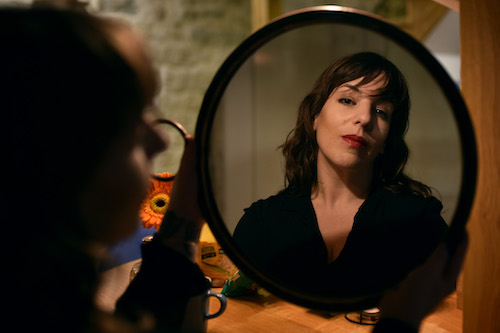
Ciao Meri, grazie per la tua disponibilità! Come stai e da dove stai rispondendo?
Ciao Fabrizio, sto molto bene, grazie. Sto scrivendo dalla west coast d’Irlanda.
Partiamo proprio dall’inizio: come e quando ti sei avvicinata alla musica?
Mia madre ballava in un gruppo folkloristico jugoslavo quando io e mio fratello eravamo bambini. Non solo frequentavamo regolarmente gli allenamenti del gruppo, ma ovviamente andavamo anche ai loro spettacoli nei fine settimana. Mio padre è un fan del blues, del soul e della musica classica, ma tutto è andato perduto una volta che mio fratello maggiore ha portato il metal in casa; entrambi abbiamo venduto le nostre anime al diavolo immediatamente. Ahah…
Sei tu che hai scelto il violino o il violino ha scelto te?
L’hai detto molto bene: il violino ha scelto me! I miei genitori volevano che entrambi suonassimo uno strumento, e io sapevo solo che volevo che fosse uno strumento a corde. Credo che mio fratello maggiore – di nuovo – sia venuto a suggerire di provare il violino. Il resto è storia.
Oltre al violino suoni tanti altri strumenti: ce ne vuoi parlare?
Beh, posso far suonare quasi tutti gli strumenti abbastanza bene se ci metto l’impegno, ma non direi che li suono molto bene. Suonare tutti gli strumenti è nato per necessità perché ho avuto difficoltà a trovare le persone giuste per fare quello che volevo fare, e così ho deciso di farlo da sola.
Per anni hai fatto parte degli Eluveitie, dal primo disco Spirit fino a Helvetios. Ti va di raccontarci come è cambiata la band e la tua vita considerando che all’inizio eravate una giovane gruppo promettente ma che si muoveva poco e dopo la pubblicazione di Slania (credo) siano cambiate parecchie cose.
È un dato di fatto, abbiamo pubblicato il nostro primo EP Vên nel 2002, molto prima di Spirit. Ero un membro fondatore e, a dire il vero, non avevamo la minima idea di cosa stessimo facendo in quel momento. Eravamo lì solo per il divertimento e la musica. Eravamo dei metallari entusiasti che adoravano la musica folk. E a quei tempi eravamo tutt’altro che una band promettente. Nessuno si è accorto di noi fino alla nostra prima esibizione dal vivo nel 2004. A quel tempo supportavamo gli Skyforger nella nostra sede locale in Svizzera.
Ti piaceva la vita della band del tipo studio di registrazione e tour promozionale o trovavi la cosa un po’ frenetica visto che dal 2006 al 2012 ci sono stati cinque album e numerosi tour e festival estivi?
Di solito faccio le cose con tutto il cuore o non le faccio affatto. Quindi mi sono divertita al massimo. Ho sempre amato il processo di scrittura – dare vita alle canzoni – e anche registrare in studio. Viaggiare, festeggiare, incontrare nuove persone e vedere il mondo è stato incredibilmente divertente. Tuttavia, può anche fartela pagare cara quando viaggi tanto quanto abbiamo fatto noi in quegli anni. Naturalmente, questo può diventare molto estenuante.
Negli Eluveitie c’è sempre stato un grande via vai di musicisti. Si sa che la mente del gruppo è Chrigel Glanzmann, ma ho sempre pensato che forse un po’ meno cambiamenti avrebbero fatto bene alla band e alla musica.
Ho lasciato la band molto tempo fa per ragioni mie. Ormai, sembra passata una vita. A dire il vero, non mi tengo aggiornata su ciò che accade negli Eluveitie, e non sono nemmeno in contatto con nessuno dei membri precedenti o attuali della band. Questa è una buona cosa? Dimmelo tu. Non lo so, ma è così.
Non ho mai saputo il perché della tua uscita dagli Eluveitie: è stata una tua decisione? Possiamo sapere anche la motivazione?
Sì, lo era. Dopo 11 anni ne avevo abbastanza. Volevo qualcos’altro per la mia vita e non mi sentivo più a mio agio lì. Ho perseguito nuovi progetti e sogni coinvolgendo persone diverse.
Nel 2019 gli Eluveitie hanno pubblicato Ategnatos e tu sei presente come voce narrante in Trinoxtion. Ci vuoi dire qualcosa a riguardo?
La mia narrazione era stata registrata molti anni prima per Slania. Chrigel lo ha successivamente riutilizzato nella loro versione del 2019.
In quegli anni hai fatto diverse comparsate in dischi del settore (Arkona, Swashbuckle e anche Belphegor), ma anche successivamente non ti sei tirata indietro, collaborando con Saor, Korpiklaani e Turisas live. Continua a piacerti il folk metal? Ci sono gruppi o artisti che apprezzi particolarmente?
Mi sono sempre sentita profondamente onorata e felice di poter diventare parte dell’arte e della visione delle persone che mi piacciono e che rispetto; è una cosa meravigliosa. Per me, il processo creativo è sempre stato l’elemento più divertente del fare musica. Quindi, collaborare con le band di cui sopra è stato un gioco da ragazzi. Devo ammettere che negli ultimi anni ho perso il contatto con la scena folk metal. Tuttavia, ho ascoltato solo di recente alcuni brani di Myrkur che mi sono davvero piaciuti. È considerato folk metal?
Da diversi anni porti avanti il progetto IRIJ: tu fai tutto, dal suonare al cantare. Hai necessità di completa libertà d’espressione e questo è forse l’unico modo per avere pieno controllo della musica?
Sì, quando si tratta della mia musica, ho visioni forti sulle quali a volte è difficile scendere a compromessi. Detto questo, ho avuto il piacere di lavorare con diversi musicisti favolosi nelle mie ultime due produzioni IRIJ. Hanno condiviso la mia visione e si sono impegnati candidamente in ciò a cui miravo. Non ho problemi a offrire a qualcuno la libertà creativa all’interno della mia musica, ma non ho voglia di discutere con nessuno quando non corrisponde alla mia visione. Ogni volta che registro qualcosa per un collega musicista, cedo il controllo a lui. Non ho problemi con questo. Tuttavia, dopo gli Eluveitie, lavorare con musicisti così favolosi è sembrato un vero piacere e un sogno diventato realtà.
Come IRIJ hai inciso due album (più vari singoli), ma negli ultimi anni hai pubblicato con il nome Meri. Ci sono differenze tra i due progetti? Perché il cambio di nome?
Sì, ho pubblicato musica con il mio nome dopo la pandemia. Avevo semplicemente altre cose di cui volevo cantare e scrivere, cose più terrene di tutti i giorni. IRIJ non è una cosa terrena; è una cosa folkloristica e un mondo oltre la nostra immaginazione. Ecco perché le mie ultime canzoni semplicemente non corrispondevano a quello. Quindi ho deciso di fare qualcosa di nuovo e ho registrato di nuovo Feverish da sola. Anche il suono è più moderno e non presenta elementi folk così forti.
Ho acquistato i due cd marchiati IRIJ e li trovo molto belli. Dentro c’è veramente di tutto e forse questo rispecchia la persona e musicista che sei diventata.
Grazie mille. Apprezzo le tue gentili parole. Credo che lo faccia.
Le canzoni nascono quando hai uno strumento in mano o lo strumento viene dopo un’idea? In caso, come “scegli” lo strumento?
Varia, a volte il mio punto di partenza è una melodia; a volte sperimento e casualmente trovo un suono che mi ispira; ma a volte ho anche qualcosa da dire – parole – e creo musica secondo un’idea o un’atmosfera predefinita.
Hai pubblicato anche come Foresaga: ci vuoi raccontare qualcosa a riguardo?
Foresaga nasce da un’idea del mio amico Björn di Colonia. È anche la mente del progetto dark folk Bjorth. Sono la violinista di entrambi i suoi progetti, per così dire. Incido i violini sulle sue tracce e ci scambiamo creatività. È una collaborazione meravigliosa a cui tengo moltissimo.
Seguendoti sui social vedo che spesso ti trovi in Irlanda: quanto ti piace la musica irish e questa ha cambiato qualcosa nel tuo approccio al violino in particolare e alla musica in generale?
L’Irlanda è la mia casa; vivo qui. Sì, amo la musica irlandese e anche la lingua irlandese. Sto imparando a parlarla. Vivo in una zona rurale dell’Irlanda, dove avvengono molte “pub sessions” autentiche. Purtroppo, a causa di altri impegni, non ho la possibilità di parteciparci quanto vorrei. Tuttavia, l’Irlanda mi ha aiutato a ricordare il motivo principale per cui mi sono avvicinata alla musica tanti anni fa: gioia, emozione, un mezzo di espressione oltre il linguaggio e un senso di unione. È molto prezioso per me.
Cosa ci dobbiamo aspettare da Meri Tadic? Quali saranno i tuoi prossimi passi?
Attualmente sto lavorando a un nuovo progetto molto entusiasmante che coinvolge tutte le cose che amo di più: musica, lingua, cultura, immagini e natura. Questa sarà una première e ne sono incredibilmente entusiasta, ma sfortunatamente non posso ancora dirvi di più. Ma vi terrò aggiornati sui miei canali social.
Per concludere: da bambina quale lavoro volevi fare e ora, da grande, qual è il tuo sogno?
Sto vivendo il mio sogno adesso.
(Domande della traduttrice Chiara) Quanto sei stata influenzata dal folklore croato nella creazione di testi e musica?
Molto. Come ho detto all’inizio, a mia madre piacevano le danze folcloristiche e cose del genere. Ha fortemente influenzato me personalmente e il mio percorso musicale. Tutto quello che ho fatto con IRIJ è fondamentalmente basato sul folklore croato con un tocco moderno. Ha ancora un posto speciale nel mio cuore e solo di recente ho scoperto qualcosa che mi ha ispirato per della nuova musica. Non so però dire se e quando vedrà la luce.
Come vedi la scena folk metal croata? Quali band ci raccomandi, anche al di fuori del folk metal?
In generale, la Croazia ha una scena musicale incredibilmente ricca e vivace. Ancora una volta, come ho detto all’inizio, sono un po’ fuori contatto con la scena musicale attualmente. Tuttavia, il mio gruppo folk croato preferito è Kries. Combinano il folklore con molti elementi moderni diversi: sono fantastici, dovresti provarli. Altrimenti, gli Old Night sono un’incredibile band croata doom metal per coloro che sono meno appassionati del folk.
ENGLISH VERSION:
How are you and from where are you replying?
Hi Fabrizio, I am very well, thank you. I am hailing from the west coast of Ireland.
Let’s start from the very beginning: how and when did you approach music?
My mother used to dance in a Yugoslavian folklore group when my brother and I were kids. We would not only attend the group’s practice quite regularly, but we would obviously also go to their shows at the weekends. My father is a fan of blues, soul, and classical music, but all was lost once my older brother brought Metal into the household; we both sold our souls to the devil immediately. Haha…
Did you choose the violin or did the violin choose you?
You’ve put that very well: the violin chose me! My parents wanted both of us kids to play an instrument, and I only knew I wanted it to be a stringed instrument. I believe my older brother – again – came to suggest that I try the violin. The rest is history.
In addition to the violin, you play many other instruments: do you want to talk about it?
Well, I can make almost any instrument sound quite nice if I put my mind to it, but I would not claim I ‘play’ those instruments very well. Me playing all the instruments was born out of necessity because I had a hard time finding the right people to do what I wanted to do, and so I decided to do it myself.
For years you were in Eluveitie, from the first album Spirit to Helvetios. Would you like to tell us how the band and your life changed considering that at the beginning you were a promising young band but that moved a little and after the release of Slania (I think) a lot of things changed.
As a matter of fact, we released our first EP Vên in 2002, way before Spirit. I was a founding member, and we didn’t have a clue what we were doing at that time to be honest with you. We were just in it for the fun and the music. We were enthusiastic metalheads who were into Folk music. And we were anything but a promising band in those days. Nobody took much notice of us up until our very first live performance in 2004. We supported Skyforger in our local venue in Switzerland at that time.
Did you like the band’s life, like recording studio and promotional tour, or did you find it a bit chaotic since from 2006 to 2012 there were five albums and numerous summer tours and festivals?
I usually do things wholeheartedly or not at all. So, I enjoyed it to the fullest. I always loved the writing process – bringing the songs to life – and recording in the studio, too. Travelling, partying, meeting new people, and seeing the world was incredibly fun. However, it can also take it out on you when travelling as much as we did during those years. Naturally, this can become very exhausting.
In Eluveitie there has always been a great coming and going of musicians. It is known that the group’s mind is Chrigel Glanzmann, but I always thought that maybe a little less change would be good for the band and the music.
I have left the band a very long time ago for reasons of my own. By now, it seems like a lifetime ago. I am not keeping up to date as to what happens in Eluveitie, to be honest, and I don’t even keep in touch with any of the band’s former or current bandmembers either. Is that a good thing? You tell me. I don’t know, but that’s the way it is.
I never knew why you left Eluveitie: was it your decision? Can we also know the reason?
Yes, it was. After 11 years, I had enough. I wanted something else for my life and did not feel comfortable there anymore. I pursued new plans and dreams involving different people.
In 2019 Eluveitie published Ategnatos and you are in it as a narrator in Trinoxtion. Can you tell us something about it?
My narration had been recorded many years prior for Slania. Chrigel has later reused it on their 2019 release.
In those years you made several appearances in various albums of this genre (Arkona, Swashbuckle and even Belphegor), but even later you did not back down, collaborating with Saor, Korpiklaani and Turisas in lives. Do you still like folk metal? Are there any bands or artists you particularly like?
I always felt deeply honoured and joyful to be able to become part of the art and vision of people I like and respect; it is such a wonderful thing. For me, the creative process has always been the most enjoyable element of music-making. So, collaborating with the bands above were a no-brainer. I have lost touch with the Folk Metal scene in recent years, I must admit. However, I have only just recently listened to some Myrkur stuff that I really liked. Is that considered Folk Metal?
From several years you’ve been carrying on the IRIJ project: you do everything, from playing to singing. Do you need the complete freedom of expression and this is perhaps the only way to have full control of the music?
Yes, when it comes to my own music, I have strong visions on which it is sometimes difficult to compromise on. Having said that, I had the pleasure to work with several fabulous musicians on my last two IRIJ productions. They shared my vision and candidly engaged in what I was aiming for. I have no problems offering someone creative freedom within my own music, but I just don’t feel like arguing with anyone when it does not match my vision. Whenever I record something for any fellow musician, I hand over control to them. I don’t have an issue with that. However, after Eluveitie, working with such fabulous musicians felt like an absolute treat and a dream to come true.
As IRIJ you have recorded two albums (plus various singles), but in recent years you have released the music under the name Meri. Are there differences between the two projects? Why did the name change?
Yes, I released music under my own name after the pandemic. I simply had other things I wanted to sing and write about, more kind of earthly everyday things. IRIJ is not an earthly thing; it is a thing of folklore and a world beyond our imagination. That is why my latest songs simply did not match with that. So, I decided to do something new and recorded Feverish all by myself again. The sound is more modern as well and it does not feature such strong folk elements.
I bought the two CDs branded Irij and I find them very beautiful. There is really everything inside and maybe this reflects the person and musician you have become.
Thank you very much. I appreciate your kind words. I believe it does.
Are the songs born when you have an instrument in your hand, or the instrument comes after an idea? In case, how do you “choose” the instrument?
It varies, sometimes my starting point is a melody; sometimes I experiment and accidently find a sound that inspires me; but sometimes I also have something to say – words- and create music in accordance with a predefined idea or atmosphere.
You also published as Foresaga: do you want to tell us something about it?
Foresaga ist the brainchild of my friend Björn from Cologne. He is also the mastermind of Dark Folk project Bjorth. I am the violinist of both his projects, so to speak. I deliver the violins to his tracks, and we exchange creativity. It is a wonderful collaboration that I hold very dearly.
Following you on social media I see that you are often in Ireland: how much do you like Irish music and this has changed something in your approach to violin in particular and music in general?
Ireland is my home; I live here. Yes, I love Irish music and the Irish language as well. I am learning to speak it. I live in a rural part of Ireland where a lot of authentic pub sessions are happening. Unfortunately, due to other commitments I don’t get the chance to join as much as I would like to. However, Ireland has helped me to remember the main reason I got into music in the first place so many years ago: joy, emotion, a means of expression beyond language, and a sense of togetherness. It’s very precisous to me.
What should we expect from Meri Tadic? What are your next steps?
I am currently working on a very exciting new project that involves all the things I love most: music, language, culture, visuals, and nature. This will be a premiere and I am incredibly excited about it, but unfortunately I’m not able to tell you more about it just yet. But I will keep you posted on my social media channels.
To conclude: as a child what job did you want to do and now, when you grow up, what is your dream?
I am living my dream right now.
(Questions from the translator Chiara) How much influenced are you by Croatian folklore in the creation of lyrics and music?
Very much so. As I mentioned in the beginning, my mother was into folklore dancing and things like that. It has strongly influenced me personally and my musical journey. Everything I have done with IRIJ is basically based on Croatian folklore with a modern twist. It still holds a special place in my heart and only recently I have discovered somethings that inspired me for some new music. However, I cannot tell if or when it will see the light of day.
How do you see the folk metal scene in Croatia? What band would you recommend us, even those that don’t do folk metal?
Generally speaking, Croatia has an incredibly rich and vibrant music scene. Again, as i mentioned in the beginning, I am a little bit out of touch with the music scene currently. However, my favourite Croatian Folk band is Kries. They combine folklore with a lot of different modern elements – they are brilliant, you should check them out. Otherwise, Old Night are an incredible Croatian Doom Metal band for those who are less into the Folk.

 Mister Folk
Lascia un commento