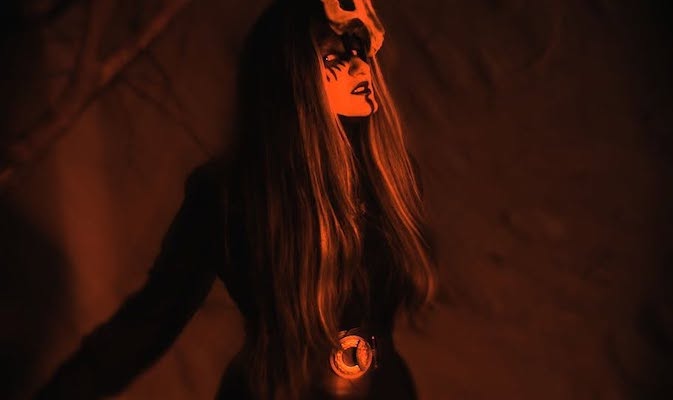
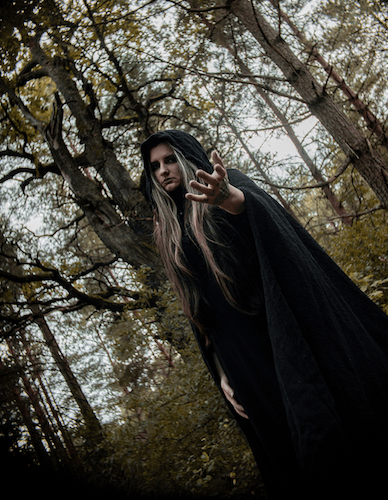
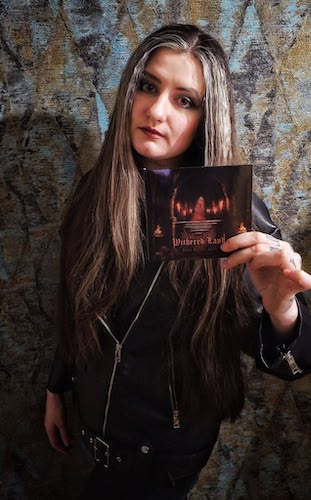
Il secondo disco dei bielorussi Withered Land, Hall Of The Dead, è stato sicuramente uno dei lavori più interessanti che ho ascoltato recentemente, capace di unire epic black metal con tematiche fantasy legate a libri e videogiochi. Il tempo di recensire il disco e intervistare la mastermind Olga Kann, ed ecco che viene annunciato il nuovo disco Piesni Vietru in uscita a fine novembre. Immergiamoci quindi nella lettura di questa bella chiacchierata avvenuta con Olga, talentuosa artista a 360° e con grande voglia di parlarci della sua creatura.
– SCROLL DOWN FOR ENGLISH VERSION! –
GRAZIE A MARZIA VETTORATO PER LA TRADUZIONE DELL’INTERVISTA
Ciao Olga! Il disco è stato recensito e il tuo nome gira spesso per via degli artwork che realizzi, ma credo sia comunque una buona cosa introdurre il progetto Withered Land.
Ciao, grazie! Withered Land è il mio progetto epic/atmospheric black metal con elementi dungeon synth/folk/viking, creato a Minsk nel 2020. La musica è estremamente influenzata da temi come battaglie, natura, epoca medievale, folklore e mitologia inquietanti, morte, esoterismo, magia, fantasy, The Elder Scrolls, Warcraft e Tolkien. Elogiando le leggende del passato, i testi sono accompagnati dai suoni epici degli ottoni, voci in pulito liriche, furiose ed estreme, tastiere monumentali, chitarre melodiche e strumenti etnici come tagelharpa e kantele. Per me, non si tratta solo di una band: è un modo di vivere, un riflesso dei miei interessi in vari ambiti. In futuro, ho in programma di realizzare la mia serie di giochi da tavolo e libri ambientati in un universo fantasy medievale creato da me.
Partiamo dal nome e sul motivo della scelta.
Volevo scegliere un nome che fosse facile da comprendere e nel complesso facile da pronunciare – un nome che mantenesse un significato personale e che al contempo alludesse alle mie fonti di ispirazione. Il lavoro di Withered Land è profondamente ispirato dal Professor Tolkien. Il titolo fa riferimento a questi splendidi versi:
“Fredda la mano ed il cuore e le ossa,
Freddo anche il sonno è nella fossa:
Mai vi sarà risveglio sul letto di pietra,
Mai prima che muoia il Sole e la Luna tetra.
Nel vento nero le stelle anch’esse moriranno,
Ed essi qui sull’oro ancora giaceranno,
Finché l’oscuro signore non alzerà la mano
Sulla terra accizzita e sul mare inumano.”
Queste parole si possono udire anche nel brano Lugburz dei Summoning (queste parole sono pronunciate all’interno de Il Signore Degli Anelli – traduzione di Vittoria Alliata di Villafranca – dallo Spettro dei Tumuli per intrappolare Frodo Baggins e compagni, ndMF). Il significato di questi versi risuona anche in me, dato che il mio paese è davvero una “terra avvizzita”, dapprima devastato da sanguinose guerre, e conseguentemente marcito sotto l’influenza funesta di alcuni fenomeni sociali. Naturalmente, sono anche circondata da una splendida natura – una natura che osserva con tristezza le vite frenetiche delle persone attorno a me. E ancora, in generale, è una terra profondamente desolata e prosciugata, priva di speranza. Ho anche ricorso all’assonanza fonetica con l’espressione “Wizard Land”. C’è molto di magico nel mio lavoro, sia nei testi che nel sound. Sono davvero connessa con i temi del fantasy, del Medioevo e ciò che vi è legato.
Withered Land è una one woman band: stufa di confrontarti con altre persone con una visione musicale differente dalla tua? Volevi un gruppo dove poter esprimere te stessa in totale libertà?
In realtà, questo è il modo più confortevole per me di lavorare: ho il mio stile di lavoro, le mie fissazioni a livello di produttività, e la mia routine giornaliera e settimanale; è sempre più facile trovare un accordo con me stessa che con molte altre persone. Al contempo, ho creato un’altra band, nella quale noi quattro siamo coinvolti in un lavoro creativo sincero e collaborativo. In ogni caso, Withered Land il sentiero freddo e deserto del lupo solitario – qualcosa che, nella mia visione, rende il black metal ancor più convincente. Non si tratta di un progetto guidato da un produttore: si tratta a pieno titolo del risultato del concept creativo di un singolo individuo. Menziono sia “lavoro”, sia “creatività”, perché al di là del lato artistico, fare musica richiede un’enorme quantità di fatica e sforzo. Io la vedo così. Pianifico le mie attività e a volte prevedo persino la mia ispirazione – che spesso dipende dalle stagioni o dai piani della vita, cose che possono essere parzialmente previste e a cui ci si può preparare. Gestisco tutto ciò che accompagna le mie uscite – grafica, testi, merchandising e rapporti con i media –, e questo richiede una gran quantità di organizzazione. È vero, a volte può essere estenuante (e, in teoria, avere altri quattro membri nella band dovrebbe alleggerire il carico), ma in pratica non mi succede praticamente mai: a ogni uscita, la mia esperienza aumenta sia a livello musicale, sia a livello organizzativo. Tutto diventa via via più chiaro e meno stancante. Quindi, la risposta alla tua domanda abbraccia entrambi gli aspetti: sfrutto l’opportunità di esprimermi e di essere responsabile solo per me stessa, anziché per gli altri, affidandomi alla mia esperienza e alla mia ispirazione.
Hai esordito con il disco The Endless Journey del 2021. Cosa ci puoi dire sulla sua realizzazione e cosa ne pensi ora che sono passati cinque anni dalla sua pubblicazione?
Non sono del tutto sicura che intendessi far diventare ciò il mio progetto primario, poiché a quel tempo stavo già lavorando con i Monumentum Damnati. L’album di debutto ha visto la presenza di un cantante ospite, ma riascoltandolo adesso, si percepisce un distacco, come se la mia storia fosse narrata da qualcun altro. Non intendo dire che il lavoro sia stato fatto male: semplicemente, c’è un valore reale nel parlare con la mia voce. L’album è stato registrato piuttosto velocemente, e benché avesse una natura concettuale, ora in qualche modo lo sento impersonale. Ho intenzione di registrarlo di nuovo da capo, in occasione di un grande anniversario, con un nuovo sound e arrangiamenti più organici. Al momento guardo alle mie ispirazioni originarie con nostalgia, ma non sento il “calore” che provo, al contrario, per i due album successivi.
Lo scorso anno è uscito Hall Of The Dead, un lavoro veramente buono e anche dinamico da ascoltare. Come è nato questo disco? Ci sono stati dei cambiamenti nel modo di lavorare rispetto al debutto?
Ti ringrazio! Beh, in realtà sì: molto è cambiato, dato che mi sono personalmente presa carico di tutto il processo. Ho lavorato sulla voce con diversi coach e ho messo a punto lo stile generale, i temi e gli arrangiamenti. Tutti e tre gli album (incluso quello in arrivo, che è già stato approvato dall’etichetta e verrà presto annunciato) sono diversi l’uno dall’altro: differiscono a livello di songwriting, di processo creativo e di registrazione, di ispirazione e di estetica visuale. Non sono mai stata interessata a realizzare album che si somigliassero: mentre il primo album era caratterizzato dalla magnificenza, nella figura di un fiero guerriero, e da un focus su un black metal epico guidato dalle tastiere, il secondo tendeva molto verso un dark fantasy e un’atmosfera medievale oscura ispirato a The Elder Scrolls, portando un po’ più di aggressività e un’oscurità più fredda, tipicamente invernale. Il terzo album in arrivo è profondamente sincero: non è una storia di guerrieri, maghi e creature mitologiche, ma quella di una persona comune. Incarna la tipica malinconia slava e un profondo senso di nostalgia e desiderio; parla di nostalgia di casa, della scomparsa dei villaggi, e della supremazia della natura, degli elementi e degli antichi spiriti naturali sull’umanità.
Qual è la tua canzone preferita di Hall Of The Dead, e perché?
In realtà, per me ogni traccia è unica a modo suo. A livello vocale, amo davvero il risultato finale di Dark Pale Winter: quegli scream glaciali mi fanno sempre venire la pelle d’oca. Al contempo, la title track vede per la prima volta la mia voce in pulito registrata (linee vocali molto acute se confrontate con la mia voce naturale). Per me, questa sarà sempre un’esperienza speciale. Il brano in sé funge da apice di quelli precedenti: tutti gli eroi caduti si riuniscono nella Sala dei Morti per intonare una marcia funebre finale dedicata a loro stessi.
Ho anche una connessione speciale con Revenge Of The Fallen: il brano fa riferimento al primo album, e narra di un guerriero defunto che ottiene la propria vendetta, senza però ricavarne la pace. Si tratta sicuramente di uno dei clou dell’album: un pezzo melodico, che ricorda un po’ il viking metal.
All Dead, All Rotten è un’altra canzone speciale per me, poiché è interamente dedicata alle Paludi Morte di Tolkien: il suo lavoro ha largamente influenzato sia la mia musica, sia il genere in toto. Ad ogni modo, probabilmente menzionerei come mio preferito il brano di apertura dell’album, Through the Winterhold’s Blizzard: adoro il videoclip che abbiamo realizzato, e il processo creativo in sé è qualcosa che ricorderò per anni. Io e mio marito Vadim lo abbiamo girato presso una tomba a tumulo storica, durante delle giornate glaciali, nel bel mezzo di una piccola foresta circondata da campi sconfinati, dove il vento gelido soffiava incessantemente, gelandoci fino all’osso. A volte, abbiamo dovuto gridare per poterci sentire e sormontare l’ululato glaciale di quel vento. Abbiamo sentito anche un lupo ululare, quando è sceso il crepuscolo. Questa esperienza ha decisamente avuto un influsso sull’atmosfera dell’album, e ho aggiunto una linea vocale di lamento all’arrangiamento, come riferimento all’ululato del lupo (una sorta di tentativo del cacciatore, divenuto ormai preda, di riguadagnare il controllo della situazione). Ma i predatori ci hanno già circondati, il folle necromante ha già lanciato sinistri incantesimi, nella migliore tradizione di The Elder Scrolls, e non si può più tornare indietro. Amo davvero questo brano.
Seguendoti sui social mi pare di capire che stai completando i sei brani di un nuovo disco. Si tratta sempre dei Withered Land? Cosa puoi dirci in anteprima?
Sì, il terzo album è già stato approvato dall’etichetta, e ulteriori dettagli saranno rivelati da un momento all’altro: abbiamo girato tre video concettuali che vedono anche la partecipazione della mia band live. Sono davvero orgogliosa di questo album: rappresenta per me il raggiungimento di un nuovo livello. In passato, avrei aspettato l’uscita dell’album provando ansia e affannandomi a capire come promuoverlo, in attesa di un attimo di respiro per poter iniziare qualcosa di nuovo, ma ora le cose sono diverse. Sto già raccogliendo materiale per il mio prossimo lavoro, perfezionando la mia tecnica, e preparando nuovi brani per gli altri progetti che ho. Il mio atteggiamento verso il creare e pubblicare musica è cambiato in maniera significativa: non aspetto più il momento perfetto, perché il momento perfetto è ora.
Nel booklet del cd ringrazi Tolkien, Warcraft e The Elder Scrolls: ci racconti cosa ti ha dato ognuno di questi e in cosa “possiamo sentirli” nella tua musica?
Si tratta di una parte molto importante di ciò che mi ha permesso di navigare attraverso alcune fasi della mia vita: mi sono sentita come se appartenessi a questi universi. Libri, giochi e film con tematiche e generi simili sono sempre stati in profonda risonanza con il mio essere. The Elder Scrolls è diventato una fonte di ispirazione primaria, e il punto di partenza per il mio secondo album: il suo titolo è preso in prestito da un’ambientazione presente all’interno del gioco. All’interno di esso ci sono diverse “Sale dei Morti”, ma adoro in particolare l’atmosfera presente in quella di Whiterun. Amavo semplicemente andare lì, sedermi e ammirare il raggio di luce che passava attraverso le aperture nel tetto, circondata da un profondo silenzio e dalla presenza invisibile degli spiriti ancestrali. Questo universo ha ispirato anche i miei video musicali. Realizzo da sola i costumi, le maschere e alcune scenografie: piuttosto che riprodurre fedelmente gli outfit presenti nel gioco, semplicemente ne traggo ispirazione.
Warcraft è epico e tragico allo stesso tempo: ho letto molta letteratura ambientata in questo universo, e i libri rivelano un mondo assai più complesso rispetto a come viene presentato nei giochi. Si tratta di un pozzo senza fondo di ispirazione, che spazia dalla classica dicotomia bene/male a tematiche molto più complesse e ambigue. Sono una grande fan degli antagonisti (personaggi caotici, neutri e malvagi), e questo universo permette loro di essere completamente approfonditi. Poi c’è il viaggio di Arthas, divenuto Re dei Lich: ho dedicato un progetto technical death metal a questo aspetto della storia (Life for Ner’zhul, attualmente in sospeso). Echi di questi personaggi possono essere percepiti anche in tutti i miei album.
Tolkien ha dato tantissimo al metal, specialmente al black metal: è impossibile quantificare il suo contributo. Il mio primo album contiene numerosi riferimenti al suo mondo: per esempio, il brano Mournful Story Never Ends è dedicato al destino di Boromir. Nel secondo album, in All Dead, All Rotten, racconto la storia delle Paludi Morte. E sono solo alcuni dei riferimenti.
Come descriveresti la tua musica a una persona che non ha avuto modo di ascoltarti?
Non si tratta del black metal a cui molti sono abituati: si tratta innanzitutto di musica dal cuore e per l’anima, basata su riff freddi ma condita generosamente con elementi cinematografici e ornamenti etnici. Le voci in pulito, in questo caso, sono decisamente appropriate, e non ci sono regole su quanti assoli siano permessi, su quanti blast beat dovrebbero essere usati, e così via. Inoltre, i temi delle mie canzoni spaziano ben oltre i classici concetti del black metal. Chiunque apprezzi i mondi fantasy, i racconti popolari, la natura, il paganesimo, gli universi dei libri e dei giochi e la cultura medievale amerà questo progetto.
Oltre che musicista sei anche una bravissima illustratrice. Le copertine e gli artwork che realizzi sono sempre molto belli. Come nasce la tua passione per il disegno? Hai frequentato scuole-corsi specifici?
Ti ringrazio! In realtà, le mie fonti di ispirazione sono perlopiù le stesse che ho per creare musica. Sono una persona dai mille interessi: in una singola giornata, puoi trovarmi a fare cose completamente diverse (leggere, ricamare a punto croce, suonare uno strumento, cantare, disegnare, cucire i costumi per il prossimo video, fare giardinaggio, giocare a scacchi o cucinare). Il mio approccio è quello di trovare ispirazione in tutto ciò che faccio. Il mio lavoro principale è costituito dagli artwork, dai booklet, dal design e dai video: qui traggo ispirazione non solo dalla mia esperienza, ma anche imparando a sentire ciò che i musicisti vedono nella loro musica, e come posso aiutarli a trasmetterlo a chi ascolta. Molto tempo fa ho studiato con un maestro, ma non ho un’istruzione formale in campo artistico. Per quanto riguarda il design, la fotografia e il video, ho frequentato numerosi workshop e alcuni corsi, ma al di là di ciò, il mio percorso è costituito principalmente dall’esperienza pratica.
Come scegli con chi lavorare? Ti fai mandare prima dei brani, o ti vai ad ascoltare le precedenti release per capire se la band ti piace? In caso, segui le indicazioni dei gruppi o ti lasci trasportare dalle emozioni per realizzare un lavoro?
Quando si tratta di collaborazioni che riguardano artwork, video ecc. (che costituiscono il mio lavoro principale, nonché la mia fonte di reddito primaria), di solito le band che mi contattano conoscono già il mio stile, quindi troviamo velocemente dei punti in comune. Le collaborazioni musicali sono un altro discorso: lì le cose non sono così semplici, poiché è necessario l’allineamento di vari fattori. Sono una persona molto occupata: per cercare di dare vita alle mie idee, letteralmente non mi bastano le ore di una giornata. Inoltre, a causa di seri problemi di salute avuti in passato, ho bisogno di molto riposo e devo seguire un regime di pause e di esercizi obbligatori, e ciò sottrae tempo prezioso. Al momento non sto accettando molte collaborazioni, anche se ricevo continuamente richieste: mi sento un po’ in colpa per non poter dedicare del tempo a tutti, ma è semplicemente la realtà dei fatti. Ora sto lavorando ad alcune collaborazioni interessanti, delle quali amo davvero il concept, il materiale e la libertà creativa; il prossimo anno verrà pubblicato un album di un progetto austro-sloveno chiamato Zorya, per il quale ho registrato le parti vocali di tutti i brani tranne uno: è stata un’esperienza fantastica. L’album ha un’atmosfera piuttosto tetra, ed è decisamente nelle mie corde.
Come musicista, invece, in quale modo hai mosso i primi passi? Quali sono stati quei gruppi o musicisti che ti hanno spinto a suonare uno strumento o a cimentarti alla voce?
È stato un po’ di tempo fa – nel 2007 o 2008: sorprendentemente, tutto è iniziato con il canto. Scrivevo la mia musica e alla fine ho imparato gli elementi base della teoria musicale, oltre che a suonare il basso. Un po’ più avanti, ho studiato pianoforte e ho continuato ad accumulare materiale: nel frattempo suonavo il basso in alcune band e non sono tornata al canto per un bel po’. Sin dall’infanzia, era certo che volessi e potessi suonare in una band tutta mia: la musica ha occupato largo spazio nella vita della mia famiglia, anche se nessuno aveva avuto un’esperienza musicale rilevante. Quando avevo sei o sette anni, disegnavo già i loghi di band immaginarie, e provavo ruoli differenti: ero profondamente ispirata dagli Iron Maiden, e il loro bassista e compositore, Steve Harris, è diventato la mia guida nel mondo della musica. Detto ciò, non ho mai voluto suonare heavy metal e simili. Quando si tratta di punti di riferimento nel canto, le cose non sono mai così immediate: per me, gli elementi principali sono sempre stati il messaggio e le emozioni, segni distintivi che, seppur non perfetti, restano nella memoria e spiccano in una folla anonima. Il mio viaggio come musicista è stato lungo e costellato da alcune interruzioni, ma continuo ad andare avanti, cercando di trarre il meglio dal processo.
Qualche tempo fa hai rilasciano un brano acustico dal titolo Echoes From The Barrow-Downs, ma dopo di questo, se non vado errato, non hai più fatto sapere di questo progetto folk. Il lavoro è stato accantonato o era semplicemente un singolo che volevi pubblicare già sapendo che non ci sarebbe stato un seguito?
È stato speso molto tempo sulla lavorazione di un album di cover di classici black metal, in chiave etnica; al di là delle cover, ho anche pubblicato un secondo brano intitolato When The Ravens Cry: si tratta di un breve brano strumentale, che vede la presenza di strumenti etnici dal vivo e del grido dei corvi. Ho in programma di completare un full-length in chiave dark folk in futuro, ma sarà probabilmente per il prossimo anno, dato che la fine dell’anno corrente sarà piuttosto movimentata: al di là dell’uscita del terzo album di Withered Land, ho in programma dei singoli e dei video per il mio nuovo progetto post-doom, Astannie.
Com’è essere metallari in Bielorussia? C’è una scena attiva fatta da gruppi, locali e festival? Ti va di raccontarci qualcosa?
Molte cose sono cambiate negli ultimi anni. Abbiamo sperimentato un’enorme impennata, seguita poi da un quasi totale annientamento. Ora è come se fossimo tornati ai tempi dell’Unione Sovietica: per esibirsi da qualche parte, è necessaria l’approvazione di funzionari ministeriali. Nulla prospera qui, tranne il dispotismo e la burocrazia. Molti musicisti sono stati costretti a lasciare il paese, perseguitati da accuse politiche: siamo un paese piccolo, rifiutato da tutti, tranne che da un vicino tiranno. Ero abituata ad andare a un centinaio di concerti all’anno, a volte più di uno al giorno, anche come fotografa e reporter: ora siamo rimasti con un enorme vuoto. Nonostante ciò, la creatività vive nelle persone, e sono loro a crearla per gli altri. Grazie a Internet, tutto questo è diventato possibile, ed è meraviglioso.
Grazie per il tuo tempo! Siamo a fine intervista, puoi concludere nel modo che preferisci.
Il mio terzo album è in lavorazione, e non vedo davvero l’ora che sia pubblicato. Ho firmato un contratto con la Immortal Frost Productions, abbiamo girato diversi video concettuali e un mini film che mostra anche i musicisti esibirsi: si tratta decisamente di una nuova fase nell’evoluzione del progetto. Inoltre, un nuovo video con la mia nuova band post-metal, Astannie, è uscito il 25 settembre – non ve lo perdete! 😉 Grazie alla webzine e a tutti coloro che supportano me e i miei progetti, a presto!
ENGLISH VERSION:
Hello, Olga! The album has been reviewed, and your name has become popular thanks to the artworks you create… But I think it is a good idea to introduce the Withered Land project.
Hello, thanks! Withered Land is my Epic/Atmospheric Black metal project with dungeon synth/folk/viking elements created in 2020 in Minsk. Music is highly inspired by such themes as Battles, Nature, Medieval times, creepy Folklore & Mythology, Death, Esoterics, Magic, Fantasy, The Elder Scrolls, Warcraft, Tolkien. Praising the legends of the past, the lyrics are accompanied by epic sounds of the brass section, furious extreme and lyrical clean vocals, monumental keyboards, melodic guitars, ethnical tagelharpa and kantele. For me, this is not just a music band; it is a way of life – a reflection of my interests across various fields. In the future, I plan to create my own series of board games and books set in a medieval fantasy universe of my own making.
Let’s start with the name and the reasons why you chose it.
I wanted to choose a name that was easy to understand and relatively easy to pronounce – one that held personal significance for me while also alluding to my sources of inspiration. Withered Land’s work was profoundly influenced by Professor Tolkien. The title alludes to these beautiful lines:
“Cold be hand and heart and bone, and cold be sleep under stone: never more to wake on stony bed, never, till the Sun fails and the Moon is dead. In the black wind the stars shall die, and still on gold here let them lie, till the dark lord lifts up his hand over dead sea and withered land.”
You can also hear these lines in the song of Summoning – Lugburz. The meaning of this phrase also resonates with me, as the country where I live is literally a withered land. First devastated by bloody wars, it subsequently rotted away under the pernicious influence of certain social phenomena. I am surrounded, of course, by beautiful nature – nature that looks on with sadness at the frenetic lives of the people around me. Yet, on the whole, it is a deeply desolate, parched land, devoid of hope. I am also drawn to the phonetic resonance with “Wizard Land”. There’s quite a lot of the magical in my work – both in the lyrics and the sound. I really resonate with themes of fantasy, the Middle Ages, and all that.
Withered Land is a one-woman band: were you tired of dealing with people who had a different musical vision, or did you want to have a band where you could freely express yourself?
In reality, this is the most comfortable way for me to work. I have my own working style, my own productivity quirks, and my own daily or weekly routine; it is always easier to come to an agreement with myself than with several other people. At the same time, I created another band where the four of us engage in genuine, collaborative creative work. But Withered Land represents the solitary, cold path of the lone wolf – something that, in my view, makes the black metal even more compelling. It isn’t a producer-driven project; it is the full-fledged creative output and concept of a single individual. I mention both “work” and “creativity” here because, beyond the artistic side, making music entails a tremendous amount of labor. That is how I view it. I plan my activities and even anticipate my inspiration – which often depends on the seasons or life plans, things that can be partially foreseen and prepared for. I handle everything accompanying my releases – visuals, lyrics, merchandise, and media relations – which involves a great deal of organizational work. While this can be exhausting at times – and having other band members might theoretically lighten the load – in practice, that is rarely the case. With each new release, my experience – both musical and organizational – grows. Everything becomes clearer and less exhausting each time. So, the answer to your question essentially encompasses both aspects: I enjoy the opportunity for self-expression and the chance to be responsible only for myself – rather than for others – while relying on my own experience and inspiration.
You made your debut in 2021 with the album The Endless Journey. What can you tell us about its creation process? What do you think about it now, 5 years later?
I’m not even sure if I originally intended for this to become my primary project, given that I was already working on Monumentum Damnati at the time. The debut album featured a guest vocalist, and listening to it now, it feels somewhat detached – as if my own story were being retold by someone else. It’s not that it was done incorrectly; it’s just that, for me, there is real value in being able to speak in my own voice. The album was recorded quite quickly; while it was conceptual in nature, it feels somewhat impersonal to me personally. I plan to completely re-record it for a major anniversary, aiming for a new sound and more organic arrangements. Right now, I look back on the origins of my inspiration with nostalgia, but I don’t feel the same genuine warmth toward it that I do for the two subsequent albums.
Last year you released Hall Of The Dead, a very good and dynamic work. What is the genesis of this release? Have there been any changes in the way you work compared to the past?
Thank you! Actually, yes. A great deal has changed, because here I’ve fully taken charge of the process on my own. I worked on vocals with several different coaches and tweaked the overall style, arrangements, and themes. All three albums (including the upcoming one, which has already been approved by the label and will be announced soon) are distinct from one another. They differ in terms of songwriting approach, the creation and recording process, inspiration, and visual aesthetics. I’ve never been interested in making albums that sound alike. While the first album was defined by grandeur, the persona of a fierce warrior, and a focus on epic, keyboard-driven black metal, the second leaned heavily into dark fantasy and a somber medieval atmosphere inspired by The Elder Scrolls; it carried a bit more aggression and a colder, wintry gloom. The upcoming third album is deeply sincere; it’s not a story about warriors, mages, or mythical creatures, but about an ordinary person. It embodies that quintessential Slavic melancholy and profound longing. It speaks of homesickness, the demise of villages, and the supremacy of the elements and ancient nature spirits over humanity.
What is your favourite track of Hall Of The Dead, and why?
In fact, every track here is unique for me in its own way. Vocally, I really love how Dark Pale Winter turned out; those ice-cold screams still give me goosebumps. Meanwhile, the album’s title track features my recorded clean vocals for the first time – vocals that are quite high-pitched compared to my natural voice. For me, this experience will always be special. The song itself acts as a culmination of the preceding tracks: all the fallen heroes gather in The Hall Of The Dead to sing a final dirge for themselves. I also have a special connection to the song Revenge Of The Fallen. It references the first album – telling the story of a warrior who finds his revenge but gains no peace from it. Melodic and slightly reminiscent of Viking metal, it is definitely a highlight of the album. All Dead, All Rotten is another special track for me, as it is entirely dedicated to Tolkien’s Dead Marshes; his work has greatly influenced both my music and the genre as a whole. However, I would probably name the opening track, “Through The Winterhold’s Blizzard”, as my personal favorite. I still really love the music video we made for it, and the creative process itself is something I’ll remember for years. My husband Vadim and I filmed it on freezing days at a historic burial mound in the middle of a small forest surrounded by boundless fields, where a wind that chilled us to the bone blew constantly. Sometimes, we had to shout to be heard over that wind and its icy howling. We even heard a wolf howling as dusk fell. That experience heavily inspired the album’s atmosphere, and I added a vocal wail to the arrangement as reference with the wolf’s howl – a sort of attempt by the hunter-turned-prey to regain control of the situation. But the predators have already surrounded us, the mad necromancer has already cast sinister spells in the best TES tradition, and there is no turning back. I really love this song.
According to your social media profiles, it looks like you are completing six tracks of a new album. Is it something related to Withered Land? Can you give us a sneak peek?
Yes, the third album has already been approved by the label, so more details will be revealed any day now. We’ve shot three conceptual music videos that also feature my live band. I’m truly proud of this album; it represents a new level for me. In the past, I would have waited for the release, feeling anxious and scrambling to figure out how to promote it, all while waiting for a breather so I could start something new – but things are different now. I’m already gathering material for the next release, honing my technique, and preparing songs for my other projects. My attitude toward creating and releasing music has changed significantly. I don’t wait for the perfect moment; the perfect moment is right now.
In your album’s booklet, you thank Tolkien, Warcraft and The Elder Scrolls: would you like to tell us what they gave you (each one of them), and where we can “feel” them in your music?
These are some of the most important things that helped me navigate certain stages of my life. In these universes, I felt like I truly belonged. Books, games, and films in similar genres always resonate deeply with me. “The Elder Scrolls” became a primary source of inspiration and the starting point for my second album; its title is borrowed from a location within the game. While there are several Halls Of The Dead in the game, I am particularly fond of the atmosphere in the Whiterun hall. I loved simply going there to sit and watch a beam of light pierce through the gaps in the roof – surrounded by profound silence and the unseen presence of ancestral spirits. This universe also inspired my music videos. I craft all the costumes, masks, and certain props myself; rather than replicating the in-game outfits exactly, I simply draw inspiration from them.
“Warcraft”is both epic and tragic. I read a great deal of literature set in this universe, and the books reveal a world far more complex than what is depicted in the games. It offers an endless well of inspiration – ranging from the classic dichotomy of good and evil to far more complex and morally ambiguous themes. I am a huge fan of antagonists – chaotic, neutral, and evil characters – and this universe allows them to be fully fleshed out. Then there is the journey of Arthas becoming the Lich King; I dedicated a separate project to this lore – Technical Death Metal “Life for Ner’zhul” – which is currently on hold. Echoes of these characters can also be heard throughout all my albums.
Tolkien has done a tremendous amount for the metal world, particularly for black metal; his contribution is impossible to overstate. My first album contains numerous references to his work. For instance, the track Mournful Story Never Ends is dedicated to the fate of Boromir. On the second album, All Dead, All Rotten, I tell the story of the Dead Marshes. And these are just a few of the references.
How would you describe your music to someone who has never listened to it?
This isn’t the black metal many are accustomed to. This is, first and foremost, music from the heart and for the soul, based on cold riffs but generously spiced with cinematic elements and ethnic embellishments. Clean vocals are appropriate here, and there are no rules regarding how many solos are allowed, how many blast beats should be used, and so on. The themes of my songs also extend far beyond classic black metal concepts. Anyone who appreciates fantasy worlds, folk tales, nature, paganism, the worlds of books and games, and medieval culture will love this project.
Apart from being a musician, you are also an excellent illustrator: your artworks and cover art are always amazing. How did you get your passion for drawing? Did you attend any courses or schools?
Thanks! In reality, my sources of inspiration are much the same as those for creating music. I am a person of a thousand interests. In a single day, you might find me doing completely different things – whether it’s simply reading, cross-stitching, playing an instrument, singing, drawing, sewing costumes for an upcoming music video, gardening, playing chess, or cooking – I approach everything I undertake with a sense of inspiration. Artwork, booklets, design, and video work constitute my primary job; here, I draw inspiration not only from my own experience but also by learning to sense what the musician sees in their music and how I can help convey that to the listener. A long time ago, I studied with an instructor, but I do not have a formal art education. As for design, photography, and video, I attended numerous workshops and a few courses, but beyond that, my path was shaped primarily by extensive hands-on practice.
How do you choose your collaborations? Do you ask for some tracks, or do you listen to the previous releases to understand if you like the band? Also, when you have to create a work, do you usually follow the band’s directions, or do you prefer to listen to your emotions?
When it comes to collaborations involving artwork, videos etc – which constitute my primary job and source of income – bands usually approach me already familiar with my style, so we quickly find common ground. Musical collaborations are a different story; things aren’t quite as simple there, as a lot of factors have to align. I’m a very busy person; I literally run out of hours in the day trying to bring all my ideas to life. On top of that, due to serious past health issues, I need plenty of rest and have to stick to a regimen of mandatory downtime and exercises, which also consumes precious time. I don’t take on as many collaborations these days, even though I receive constant requests. I feel a bit guilty about not being able to devote time to everyone, but that’s just the reality of the situation. Right now, I’m working on a few interesting collaborations where I genuinely love the material, the concept, and the creative freedom involved. Next year will see the release of an album by the Austrian-Slovenian project Zorya; I recorded vocals for every track except one. It was a fantastic experience. The album has a rather bleak atmosphere, and the themes really resonate with me.
How did you take your first steps as a musician? Which bands or musicians inspired you to the point of starting to play an instrument or sing?
It was quite a while ago – back in 2007 or 2008. Oddly enough, it all started with vocals. I wrote my own music and eventually learned to play the bass guitar and the basics of music theory; a little later, I studied piano and kept amassing material. At the same time, I played bass in various bands and didn’t return to singing for a long while. Ever since childhood, I was certain that I wanted toand could play in my own band. Music was a huge part of my family’s life, even though no one had any serious musical experience. By the time I was six or seven, I was already sketching logos for imaginary bands and trying on different roles. I was deeply inspired by Iron Maiden, and their bassist and songwriter, Steve Harris, became a guiding light for me in the music world. That said, I never wanted to play heavy metal or anything close to it. When it comes to benchmarks in singing, things aren’t quite so straightforward. For me, the primary elements have always been emotion and message – distinctive touches that, even if not technically perfect, are memorable and stand out from the faceless crowd. My journey as a musician has been long and marked by some breaks, but I keep moving forward, simply trying to get the most enjoyment out of the process.
Some time ago, you released an acoustic track, Echoes From The Barrow-Downs, but if I am not mistaken, you didn’t say anything more about this folk project. Did you put this work aside, or was it just a single you wanted to release without a follow-up?
A lot of time was spent working on an album of ethnic covers of black metal classics. But I also released my second track (besides covers) – When The Ravens Cry. It’s also a short instrumental featuring live ancient ethnic instruments and the cries of ravens. I plan to complete a full-length dark folk album in the future, but most likely next year, as the end of this year is going to be very eventful. Besides the release of the third full-length album of Withered Land, I also have singles and videos planned for my new post-doom project, Astannie.
What is it like to be a metalhead in Belarus? Is there an active scene made up of bands, venues and festivals? Would you like to tell us something about that?
So much has changed in recent years. We have literally experienced a massive surge followed by near-total annihilation. It feels like we’re back in Soviet times now; to perform anywhere, you need approval from ministry officials. Nothing thrives here but bureaucracy and despotism. Many musicians were forced to leave the country, hounded by political accusations. We are a small country, rejected by everyone except a large, despotic neighbor. I have no positive thoughts about the future. The Belarusian music scene seems to have no future. Just as no one comes here to perform anymore due to the sanctions. I used to attend around a hundred concerts a year – sometimes several in a single day, including as a concert photographer/reporter. Now, we are left with a vast void. Yet creativity lives on in people. It is people who create it for others. Thanks to the internet, so much has become possible, and that is wonderful.
Thank you for your time! We are at the end of this interview; you can close it as you like.
My third album is currently in the works, and I’m really looking forward to it. I’ve signed a contract with the label Immortal Frost Productions. We’ve shot several conceptual videos and a mini-film that will also feature plenty of footage of the musicians performing. This is definitely a new stage in the project’s evolution. Also, a new video with my new post-doom metal band, Astannie, is coming out on September 25th – be sure to check it out ;). Thanks to the webzine and everyone who supports me and my projects – see you soon!


Rispondi